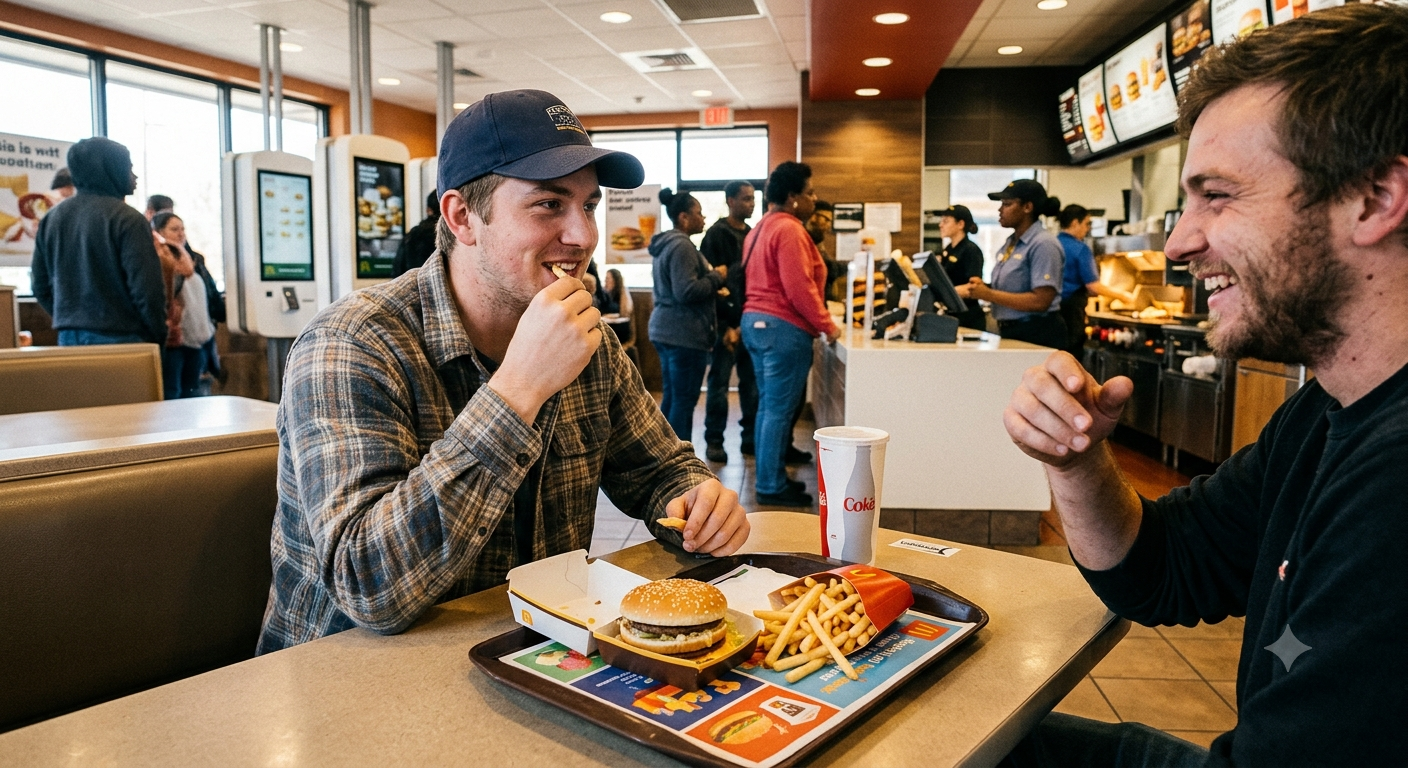
In recent years, the American experience of dining out is changing and not for the better. Yet people continue to eat out in record numbers. We once understood a restaurant meal to be a deliberate, unhurried ritual—a shared agreement that for the price of an entrée, you were purchasing a temporary membership in a hosted community where you are a valued customer and the staff is there to please and satisfy. Today, that experience has been replaced by the desire to increase transactional efficiency. You are no longer a guest; you are a data point in a room that increasingly resembles a warehouse with chairs. Many restaurants are now part of a chain. The chain is under pressure to increase profits and please shareholders at the expense of the customer. As service quality declines and prices reach historic highs, the industry is undergoing a radical restructuring due to laws, labor shifts, and the rise of third-party delivery platforms like DoorDash and Uber Eats. These food tech apps have introduced intense “vertical competition” through commissions ranging from 15% to 30%. Consequently, restaurants are forced to prioritize high-volume digital orders over the experience of in-person diners to maintain razor-thin margins.